Traditional medicines in Tibetan medicine
Traditional Tibetan Medicine (TTM), or Sowa Rigpa, uses complex multi-ingredient formulas extracted from plants, minerals, and animal products found at high altitudes. The medicines are based on the five elements (earth, water, fire, wind, and space) and seek to balance the three bodily humors (rLung, mKhris-pa, and Bad-kan). Tibetan medicine relies heavily on plants that thrive in extreme Himalayan conditions.
Traditional medicines known and available today include:
- Rhodiola (Sokdzin): Used to combat altitude sickness, relieve anxiety, and provide energy.
- Snow Lotus (Kardor): Traditionally used to treat digestive disorders, fever, and colds.
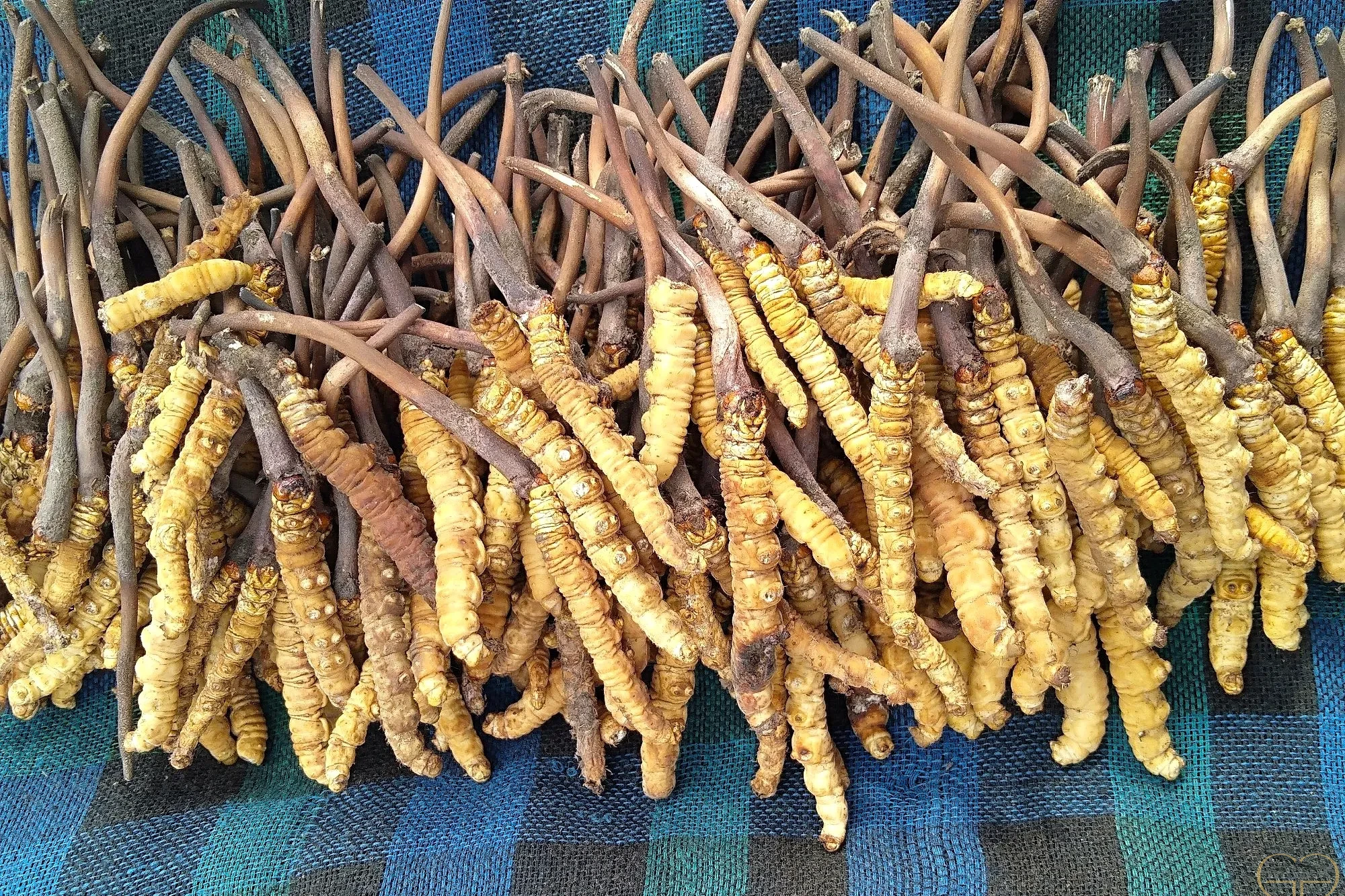
- Cordyceps sinensis (Yartsa Gunbu): A powerful fungus valued for its primary active compound, cordycepin, and used as an immune and vitality tonic.
- Rinchen Drangjor: Well-known “precious pills” that combine more than one hundred ingredients, including detoxified precious metals (gold and silver) and minerals, for the treatment of chronic diseases, gastrointestinal cramps, and arthritis.
Essential medicines, often used for their strong potency and aroma, include the “Six Good Medicines”: bamboo pith, black and green cardamom, cloves, nutmeg, and saffron. Bamboo pith (Nyook Choo Gang), for example, is considered one of the “coldest” medicines and is commonly used in formulas intended to reduce inflammation and heat in the lungs. Therapeutic writing should never replace professional medical care or diagnosis.
Tibetan “precious pills” and other complex formulations are often used for chronic or systemic diseases. They combine herbal, mineral, and sometimes animal products in detoxified forms in order to harmonize the three bodily humors. Practitioners of Tibetan medicine claim that these complex formulations possess synergistic properties that individual plants cannot reproduce. The pills contain more than one hundred ingredients, including gold, silver, copper, iron, sapphire, emerald, turquoise, and ruby in their detoxified forms.
Traditional Tibetan Medicine (TTM), is an ancient healing system that includes the use of various medicinal plants to prevent and treat acute mountain sickness, depression, asthma, and other conditions.
Geo-authentic medicinal materials, also known as “Daodi plants” in Chinese, are considered to have greater efficacy and quality compared with their equivalents obtained from alternative geographical locations. In 2024, eight (8) medicinal materials represented by Cordyceps sinensis Sacc. were listed as geo-authentic Tibetan medicines under the administration of the local government.
However, there is no comprehensive laboratory review of these geo-authentic TTM materials, particularly regarding their pharmacological benefits for human health. Such a review would aim to document the pharmacological properties, phytochemical components, safety, toxicity, and future development of geo-authentic TTM materials, which play an important role in promoting health and well-being.
Plant-derived molecules (i.e., polysaccharides, flavonoids, glycosides, terpenoids, and alkaloids) in TTM may demonstrate therapeutic potential for managing mental and physical health. Finally, the applications and prospects of TTM plants would be discussed in order to support the use of these species in traditional medicine for human health and to promote public health in modern societies.
Geo-authentic medicinal materials, known as “Daodi plants” in Chinese, are often selected based on their widespread use in Chinese medicine clinics. They are cultivated in specific geographical regions and are known for their superior quality, efficacy, and reputation compared with herbs of the same species cultivated elsewhere.
This classification is based on the natural characteristics of topography and geomorphology, as well as the essence of the national medical system. This has resulted in the establishment of 15 production regions for geo-authentic medicinal materials in China, particularly in the Tibetan region.
The diversity of biological and medicinal cultures of Traditional Tibetan Medicine (TTM) on the Qinghai – Tibet Plateau is remarkable. Medicinal materials have been widely used for thousands of years in conventional medicine to treat conditions such as acute mountain sickness, depression, asthma, and others. Following prescribed protocols and selection criteria, the Tibetan Pharmaceutical Association focused its attention on herbs produced in Tibet, culminating in the publication of the latest list of eight (8) geo-authentic TTM materials in 2024:
- Cordyceps sinensis Sacc.
Rhodiola rosea L.
Saussurea involucrata
Onosma hookeri
Dracocephalum tanguticum M.
Carum carvi L.
Gymnadenia conopsea L.
Brassica rapa L..
The bioactive components in these plants have been extensively studied for their pharmacological effects, and significant progress has been made in this field. Some of these medicinal plants, such as R. rosea L., B. rapa L., and S. involucrata, grow at high altitudes. Most of the species mentioned are known for their pharmacological potential to promote health through traditional culinary and medicinal practices. These herbs are considered among the highest-quality medicines in Tibetan medical literature and have been used for more than 3,800 years to strengthen Qi and address deficiencies.
Due to renewed interest in the reuse of traditional medicinal herbs in recent years, new research has been conducted on the use of natural plants in treatments for hypoxia and fatigue. Given the similarities between fatigue and hypoxia (i.e., weakness and depression), potential interactions have been proposed and remain the subject of active discussion.
The therapeutic potential of Tibetan medicinal herbs has produced promising results in the treatment of hypoxia, fatigue, and related symptoms (Hua et al., 2021b; Zhu et al., 2021; Zhu et al., 2022a). However, based on current understanding, there is a lack of scientific literature providing a comprehensive review of the eight newly recognized geo-authentic Tibetan medicinal materials for the treatment of hypoxia, fatigue, and related symptoms.
Hypoxia (a lack of oxygen in the tissues) is common on the Tibetan Plateau and can cause shortness of breath, an increased heart rate, confusion, and bluish discoloration of the skin (cyanosis). Mild signs include headache, anxiety, and fatigue. Severe hypoxia can lead to loss of consciousness and organ damage and requires immediate medical attention.
This review of medicinal herbs seeks to analyze the selection of these geo-authentic medicinal materials, as well as several other high-altitude species commonly used in TTM, for their effectiveness in treating common symptoms such as hypoxia and fatigue (Li et al., 2018a; Zhao et al., 2021b), as well as conditions such as depression, asthma, and acute mountain sickness (Ma et al., 2011). Finally, we outline the opportunities and challenges associated with the use of geo-authentic traditional medicinal plants.
Tibetan medicines, particularly those consisting of herbal medicines, are among the oldest and most effective medicines in the world. Tibetan medicines are so ancient that they date back almost to the emergence of Tibetan civilization, and these medicines have become an integral part of authentic Tibetan culture. Medicines in the Land of Snow are primarily made from herbs and other mountain plants and flora. The entire body of knowledge concerning Tibetan medicines is based on Tibet’s heritage book, described in the Four Tantras, or rGyud-bZhi.
The eight (8) most popular Tibetan medicines Sowa-Rigpa are:
Ophiocordyceps sinensis is a unique parasitic fungus that infects caterpillars and is used as an extremely popular medicine in Tibet. This medicinal material develops when the fungus attacks moth larvae. As a result, it resembles dead caterpillars—dried and yellow in appearance. In spring, the fungus mummifies the caterpillars, resulting in a fungal material that is used medicinally. It is harvested by hand and subsequently dried for medicinal purposes.
The famous Ophiocordyceps sinensis is known as a “magical” plant because of the various benefits attributed to it. Consumption of this material is traditionally believed to promote good health. It is claimed to have the ability to slow the aging process and strengthen the cardiovascular and respiratory systems. It is also traditionally associated with providing strength to the body, improving blood circulation, and maintaining normal blood pressure. It has also been claimed to help eliminate blood clots and reduce cholesterol.
It is believed to have an exceptional ability to provide strength and help the body recover from illness and heal wounds more quickly. It is also traditionally used for conditions such as yellow fever, bronchitis, kidney disease, asthma, and others. It is also claimed to help with the effects of cancer, particularly chemotherapy.
Therefore, this plant is undoubtedly known as a “magical plant” of Tibet and China. Consumption of Ophiocordyceps sinensis is relatively simple. The dose for an adult is stated to range from 0.3 to 0.7 grams, approximately corresponding to one or two pieces of the material. However, the size of the parasitic fungus is important, and the weight cannot be accurately estimated in this way.
It is also known as an ingredient in Tibetan tea, consumed together with the material. The root is also used as an ingredient in many Tibetan dishes. It can also be ground into a powder and mixed with milk or another liquid before consumption. However, it is always better to consult a physician before taking this medicine.
Rhodiola, also known as Rhodiola rosea or rose root, is very popular in Tibet. It is a flowering plant with bright yellow flowers that grows in cold mountainous regions, such as Arctic areas and the mountains of Tibet. The flowering plant is perennial and belongs to the Crassulaceae family. This flowering plant is used as a traditional herbal medicine in the Tibetan region. It consists of a fleshy stem and a short, scaly root. It is this root that has medicinal value in Tibetan medicine.
This plant is mainly known as an herb for relieving anxiety. It is widely used to alleviate anxiety. It is also used to combat altitude sickness and several other forms of discomfort associated with high altitudes. It provides energy and recovery to the body, particularly at high altitudes where these are most needed.
It is used to combat insomnia and is traditionally described as having an invigorating effect on the lungs and heart. However, its primary function is considered to be calming an overactive adrenal system. The medicine is usually consumed by mixing it with herbal tea. However, it is most commonly prepared in capsule form for consumption. Dosage should be determined according to a physician’s recommendation.
Snow Lotus, like Rhodiola, is another perennial plant that grows in cold, mountainous regions of Asia, North America, and Europe. It consists of dense flowers that resemble thistles. Thick white, woolly hairs surrounding the flowers give them a snow-like appearance, which is why it is called Snow Lotus.
Nevertheless, this small plant, with an average height of 5–10 cm, is used as one of the most important medicines in Tibet. The root of this plant is considered the most useful part. Snow Lotus has many important functions. It is used for digestive disorders, fever, and headaches. It is considered particularly useful for hair loss and premature graying of the hair. It is also used to combat epilepsy, pleurisy, bronchitis, and colds.
It is traditionally used for herpes and may be used for dental and urinary problems. It is also claimed to normalize blood pressure and support proper blood circulation. It is used for colic, cholera, and skin diseases. Therefore, it is traditionally believed to help rejuvenate the body and maintain internal cleanliness. It is also described as an appetite stimulant and may increase hunger. Snow Lotus is mainly consumed in powder form. It is also available in capsules. However, dosage should be discussed with a physician. It may also have adverse effects during pregnancy and breastfeeding.
Ginseng is also a small perennial plant that grows in mountainous regions of Asia and Europe. These plants are characterized by fleshy roots that are primarily used for medicinal purposes. The root of this plant has a branched shape and a long stem containing green oval leaves. The well-known Ginseng, available in both Asia and America, has a number of important medicinal functions.
It acts as a source of energy and is traditionally considered rejuvenating for the body. It may also help maintain blood pressure and thereby reduce stress and tension. It is known as a remedy for diabetes and has also been claimed to help prevent cancer. It is also traditionally used for influenza and RSV. Ginseng dosage should be determined entirely by a physician. This is because excessive consumption of Ginseng may cause blurred vision, dizziness, dry mouth, and other similar health problems. It can be taken in the form of capsules, powders, and even syrups available on the market.
Saffron is also a perennial plant, abundant in mountainous areas. The plant produces a beautiful, bright purple flower with colorful stigmas. These stigmas are dried and used for various purposes, including as a spice, medicine, and ingredient in cosmetic products. In this article, we discuss the medicinal value of saffron. As mentioned above, saffron is widely used for skin and hair problems. It is considered an excellent remedy for alopecia. Women also use saffron to relieve menstrual cramps and PMS, or premenstrual syndrome. It is considered a remedy for premature ejaculation and male infertility.
In addition, it is traditionally used for whooping cough, asthma, insomnia, gastritis, Alzheimer’s disease, dry skin, and several heart-related problems. Saffron is also used for stress and shock, as well as for hardening of the arteries, hemoptysis, and body pain. It is also an excellent spice. Consumption of saffron should depend entirely on the dosage prescribed by a physician. However, it may be consumed with food, in capsule form, or mixed with boiled water.
Musk (Moschus) is a Tibetan medicine obtained from a special species of mountain deer. It is an aromatic glandular secretion obtained from the male musk deer native to the Himalayan region. It is a type of fragrant substance obtained from the glandular secretions of deer, usually purplish in color, bitter in taste, and possessing an extremely strong, penetrating aroma.
In Tibetan medicine, it is classified as a powerful substance used to eliminate fever, reduce inflammation, treat neuralgic pain, and revive unconscious individuals. Musk is considered extremely useful for diseases of the brain and liver. Its strong aroma is also traditionally used to restore consciousness after fainting. Furthermore, it is used to treat kidney dysfunction.
There is also a belief that musk is extremely beneficial for treating cancer. However, the validity of this claim is questionable. The dosage of musk is highly variable because it depends entirely on the physician prescribing it. It is usually taken in capsule or powder form. However, Tibetans have traditionally attributed several medicinal properties to this substance. Musk serves as a primary catalyst in the complex multifunctional herbal preparation known as the “Precious Pills” (Rinchen Dilbu).
For example, it is a major ingredient in a preparation made from several types of herbs combined with musk, including herbs such as Terminalia chebula (myrobalan) and Costus root (Latin: Saussurea costus, also known as Aucklandia costus or Indian kuth), an aromatic medicinal root native to the Himalayas and traditionally used for inflammatory conditions, severe sore throats, and nerve pain.
Coreopsis grandiflora, belonging to the sunflower family, is another perennial or herbaceous plant. It consists of small yellow flowers and pointed leaves, but the seeds of this plant are considered particularly important. It is also known as tickseed and is attributed with notable medicinal properties. The main importance of this herb is its purported stabilizing effect on the nervous system. It is traditionally used to help calm an overstimulated nervous system.
It is also believed to support proper blood circulation and nerve health. Another important traditional use of this plant is to support the body’s metabolism, thereby helping maintain health and vitality. There is no specific method of using this plant other than finding it in Tibetan dishes. It is also available in powder and capsule forms. Dosage depends entirely on a physician’s recommendation.
The Lingzhi mushroom is also known as the Reishi mushroom. It refers to a type of medicinal mushroom preparation containing a complex mixture of fungal compounds. These mushrooms are used primarily for medicinal purposes, particularly in Chinese traditional medicine. They are widely found in Southeast Asia. Lingzhi mushrooms are attributed with many important medicinal properties. They are traditionally used to strengthen the human immune system.
They are also claimed to help prevent cancer and combat aging. In addition, they are traditionally described as helping the body eliminate various toxins. These mushrooms are often cooked and eaten. For Tibetans, they are considered a type of delicacy. They are also available in powder and capsule forms.
Understand that the abundance of the universe is available to everyone, Prof. dr. Smajo Safić Gupta

11. September 2026
21. August 2026
27. July 2026