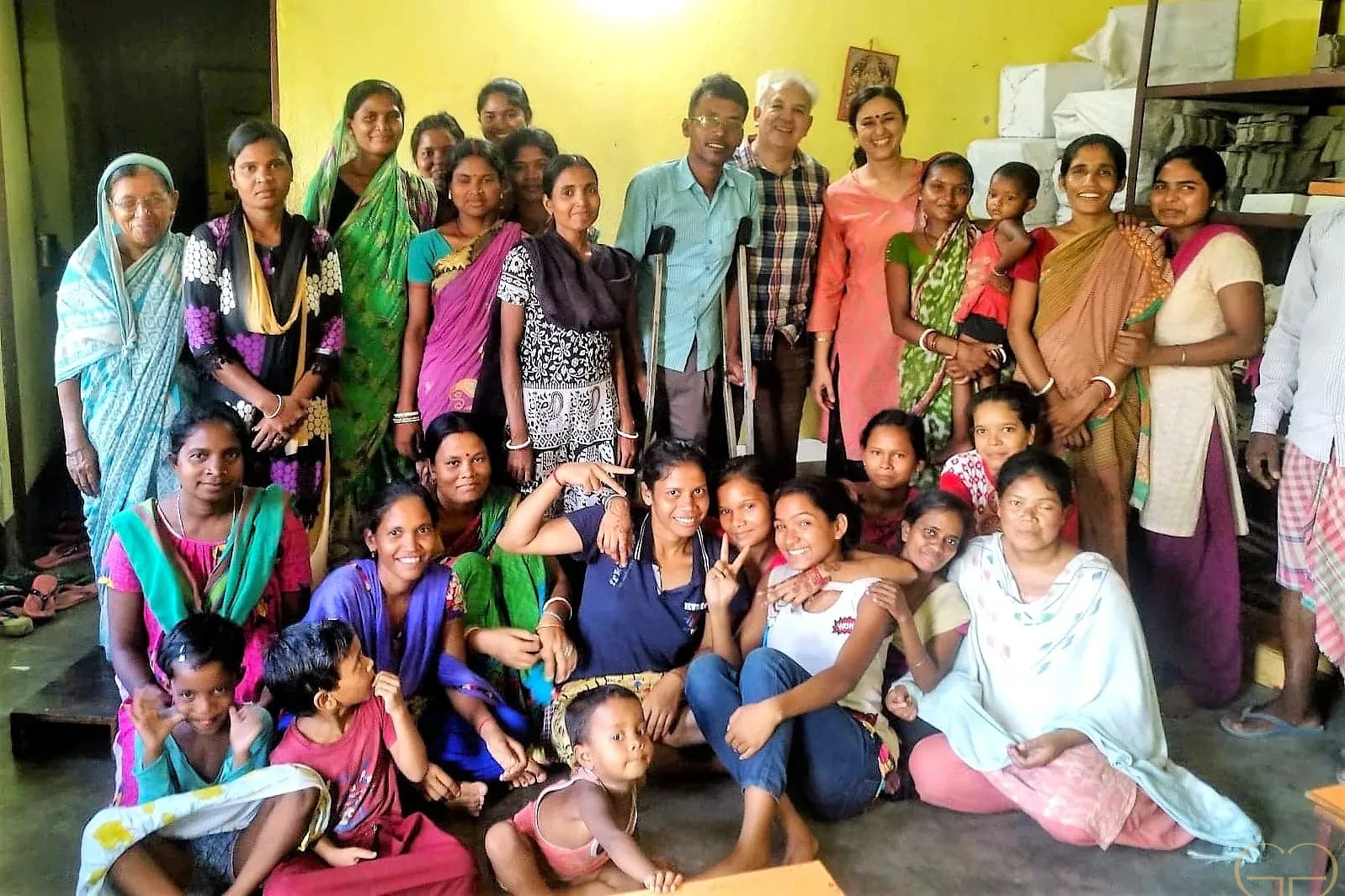
The conception of Love in Asia

The conception of Love in Asia
Love in Asian cultures is deep, multifaceted, and often quite different from Western ideals of individualism and romantic passion. Instead of expressing feelings with words (“I love you”), love in Asia is traditionally expressed through actions, duty, respect and care for the community.
Chinese and Confucian tradition: Love as duty! In Chinese culture, which is strongly shaped by Confucianism, love is inextricably linked to social harmony and responsibility.
- Xiao (filial piety / respect for parents): The highest form of love is respect and care for parents and ancestors. It is the foundation of all other relationships. Love for a partner must not threaten the harmony of the primary family.
- Yuanfen (destiny): The concept that two people are fated to meet. If the relationship does not work out, it is often accepted with the thought that “yuanfen” was not strong enough, which reduces personal guilt.
- Actions instead of words: Romantic love is rarely expressed verbally. Instead, it is said through practical care – for example, the question “Have you eaten?” is often a stronger expression of love than “I love you” in the Chinese environment.
Japan: Love in silence and harmony! Japanese culture highly values subtlety, picking between the lines and keeping the peace (Wa).
- Amae (authentic addiction): A key concept described by psychoanalyst Takeo Doi. Mention the desire that your loved one accepts and hugs you, and that you can easily fall in love with her without fear of rejection (similar to the relationship between a child and a mother).
- Ishin-denshin (understanding without words): Love means understanding the partner without speaking. The emphasis is on empathy and anticipating the needs of others.
The Japanese distinguish between two forms of love:
- Koi: Selfish, passionate and romantic love (often sexual longings and idealizations).
- Ai: Deep, mature and selfless love, which includes long-term care and commitment.
South Asia (India): Spiritual and cosmic love! In the Indian tradition, love is intertwined with religion, spirituality and eternity.
- Bhakti (divine devotion): Love as a form of worship. In Hinduism, romantic love is often reflected in stories about gods (eg Radha and Krishna), where earthly love is the path to union with the divine.
- Prema (pure love): The highest form of love, which is completely selfless, spiritual and transcends ego and physical attraction.
- Kama: Aesthetic and sensual pleasure and desire. Although it is corporeal, it is recognized in Hinduism as one of the four legitimate goals of human life (purusharte), which must be practiced ethically.
Buddhist concepts (Wider Asia), which is present in SE Asia, Tibet and East Asia, defines four “boundless states” of love:
- Metta (loving-kindness): The desire to make all people (not just the partner) happy.
- Karuna (compassion): The desire to save others from suffering.
- Mudita (sympathetic joy): Joy in the accomplishments, good fortune, and happiness of others.
- Upekkha (equanimity): An all-embracing, unbiased love that treats all beings equally, free from attachment, aversion, or indifference.
In my opinion, Asians (Indians) consider love as responsibility. Parents never say I love you to their significant other or kids. But they pay for their schooling without any doubt. Kids stay with parents their whole life. Parents take care of their parents in old age. Parents expect their kids to take care of them when they get old. Parents find life partner for their kids. Parents take most life decisions for their kids. Parents consider this love for their kids.
Couples don’t kiss in front of other people. Everyone pretends that sex doesn’t happen. In -laws interfere in lives of couples. All these is considered one or other form of love in Asia.
First of all, I think the broad generalizations of Asians vs. Westerns is inappropriate for this question because the answer would be different for each culture within Asia (or the Western World). Many cultures in Asia may view “love” in a closer way to how someone in the outside the Asian world views it, for example, than someone in a different Asian culture.
In addition, there is a huge cultural gap between the younger generations and the older generations. I imagine that the feeling of “love’ is much the same between all cultures, but concepts about love in relationships are different. Speaking strictly about the difference between the traditional Chinese and EU cultures, I would say that Asians (Chinese) place greater emphasis on familial love while EU place greater emphasis on passion and chemistry.
Asians (Chinese) also tend to associate love more with marriage and family (Marriage and kids tend to be goals in a romantic relationship) than their Western counterparts.
Moreover, once a couple is married, the husband and wife are considered family and it’s very rare for divorces to occur on the basis of lack of attraction or “growing apart.” Traditionally, divorce is frowned upon in China (except in cases of things like abuse); however, couples usually spend a much longer time learning about each other before they consider starting a relationship and there is less dating around or “experimenting.”
However, the younger generations are greatly influenced by EU culture and will tend to have a much more similar view of love and relationships with EU cultures,
On the surface, I find questions such as this one fairly disturbing, as they imply a fundamental difference between peoples, much reminiscent of the old British racism-imperialism (“East is East, and West is West, and never the twain shall meet” in the all-too-forgettable words of the Bard of the British Empire) (Britons weren’t alone in this, of course).
At a closer inspection, they are simply meaningless (no offence meant), since there is no paradigm of “westerner” (who’s that? a Scot? a Brazilian? a Russian? an Italian? how close are these?) or of “Asian” (a Chinese? a Turk? a Korean? an Israeli?).
Many of the answers focus on the external showing of affection, which is beside the point – love, whichever angle you choose to look at it, is a basic human feeling (I’d go further and say it is shared to some extent throughout the animal kingdom) and we – I hope everyone agrees on this – are (again paraphrasing Kipling) “brothers under our skins”.
Like the fragrance of a flower, if one has love, it is for all – this is the view of J. Krishnamurti. West defaults love to romantic love. As an act rather than a state of mind. Love, to them is exclusive though not eternal. It is a narrower view of love.
In Indian philosophy, Love is essence of our beings, innate to our core nature, our true Self. Most humans are not in touch with their inner loving being as Ego (False Self) comes in between. So, the love that they practice is neither universal nor unconditional. It manifests as a desire rather than a trait. It gets mixed up in a conidium of desires including lust, power, fame, affiliation, security & such.
Generally speaking, “Love” to Asians and Westerns is not very different. People also flirt, confess, go on dates, have sex, propose marriage, get married, have children, have a divorce, fall in love again… The duration of each phase and how things happen might be a bit different depending on each individual’s story, but the rest is similar and mutual. We are all humans eventually.
In US and EU cultures, people are more relaxed and open regarding divorce. In Asia, having a divorce is somehow considered a taboo, and people often put up with it even though they are in bad marriage.
The idea behind it is that a kid growing up with divorced parents tends to be unhappy and miserable. That kid also will be judged by the society including his neighbours, relatives and friends. Thus, it is bad to have a divorce even if you are not in a happy marriage with your partner.
There are some differences in the concept of love, like it depends on the region, the culture and go on. But the common thing between all Arab countries is that physical interaction (especially deep interaction) between the couple before marriage is not good at all and this is for religious and cultural reasons.
Plus, even after marriage, of course it is normal to interact with your beloved one physically but in Arab countries if you do that in front of your parents or grandparents and so, or out in the streets (I mean like kissing for so long), it is seen disrespectful. But like in any other place, in Arab countries too love means caring, having feelings to someone and go on. Also, the majority (I mean of course not every single one, people are different) have a serious look for love, like they look for serious relationships.
Even in the regions where they are not so extreme (Like for example they don’t believe love comes after marriage or don’t go for other extreme things), still they look toward marriage if everything goes well with their beloved one. Arabs like stability and the family has a big importance for them.
- Religion is private in Western cultures. Religion is a social fabric in Asian cultures.
- Sexuality is private in Asia. Sexuality is a social fabric in Western cultures.
- Society driven child raising in Asia. They aim to raise socially adjustable adult. They think in frames of family values the person has.
- Self-cantered child raising in Western cultures. They aim to raise self-fulfilled and independent adults. They think in the terms of citizen worth a person has.
- Families come first and individual second in Asian cultures.
- Individual comes first and family later in Western cultures.
- Age based respect is taught in Asian cultures.
- Authority based respect is taught in Western cultures.
- Strong inner health encouraging, emotional and intellectual calmness promoting traditions in Asian cultures.
- Strong physical health encouraging, fitness and intellectual exploration promoting traditions in Western cultures.
- Freedom is applauded and inspired in Western cultures.
- Freedom is to be treated with caution and restraint in Asian cultures.
- Trust your elders is standard social advice in Asian cultures.
- Think for yourself is standard social advice in Western cultures.
- Parents expect to live with children in old age in Asian cultures.
- Parents expect to live by themselves in old age in Western cultures.
- Old age and early childcare is not institutionalised in Asian cultures.
- Old age and early childcare is institutionalised in Western cultures.
- Average Western mind has fun driven approach towards life.
- Average Asian mind has peace driven approach towards life.
In Asian, noticed that many people in Asian countries write a lot of poems and stories about love but hesitate to speak about sexuality. The main reason behind this is a lack of proper sexual education and culture. Many people feel uncomfortable discussing sexuality openly. Relationships can succeed without sex if both partners feel satisfied and share mutual emotional, intellectual, or spiritual alignment, such as in platonic or asexual partnerships.
Now, the situation has changed a lot. Even young children have mobile phones in their hands. If they want to know something, they can quickly search for it on the internet. Due to these factors, many people born before 1996 tend to see love and sexuality as separate matters, while those born afterward often focus more on the sexual aspect.
If we look specifically at my generation or the ones before it, especially among Asian women, many view sexuality as simply another responsibility associated with marriage or as a means to have children. Their knowledge about enjoying it or ways to experience pleasure is very limited.
In India country, recent years have seen it consistently ranked among the top countries where the word “sex” is most searched on Google. This saddens me because I doubt whether these people are receiving accurate sexual education through the internet.
Additionally, if they access it through pornography, it’s certainly not a healthy source. If you are a married person, you know how different real-life sexual experiences are compared to what’s seen in such media. This can lead to unrealistic expectations, resulting in short-lived relationships.
A successful married life can only be achieved by maintaining a balance of both love and sexuality within a relationship. This raises the question of whether this issue can be addressed solely through school education or through teachings at home. Either way, there is a definite need for progress in sexual education; otherwise, in the future, we may only see more divorces than successful marriages.
In many traditional and modern Asian cultures, marriage and partnerships – LOVE – are viewed not just as a connection between two individuals, but as a union and shared project between two families.
In countries like South Korea, formal meetings – such as sanggyeonrye – bring both sets of parents together well before a wedding to formally vet and approve the match.
In places like Japan, unique practices like parent-proxy matchmaking exist, where parents actively attend matchmaking events on behalf of their adult children to find suitable partners. Parents often evaluate potential partners based on stability, career background, family reputation, and values rather than purely romantic chemistry.
Family ties run deep, and major life milestones like marriage impact extended relatives, lineage, and social standing. Historically, marriages placed a heavy emphasis on long-term partnership, mutual obligation, financial stability, and shared responsibilities rather than overt public romance. While younger generations increasingly date and choose their own partners independently, parental expectations and family integration remain a powerful cultural influence.
In India, traditional arranged marriages are common, where parents and extended family play a central role in selecting a life partner based on factors like caste, sub-caste, community, family background, and astrology (kundli). For generations, families viewed arranged matches as a way to ensure social stability, shared values, and family alignment.
In modern urban areas, the landscape is changing. Young adults increasingly meet their own partners through dating apps, workplaces, or social circles, and then involve their families to formalize the union with traditional ceremonies (often called “love-cum-arranged” marriages).
Marriage in India is often seen as an alliance between two families rather than just an individual choice. Even when young people choose their own partners, parental and societal pressure regarding caste, religion, and family approval remains a significant factor.
Today, many contemporary matrimony and dating platforms now allow parents and young adults to look for compatibility together, blending personal choice with family guidance.
The Rigveda and Modern Perspectives on Love
The Rigveda, the oldest of the Hindu sacred scriptures, approaches Love not as a singular romance, but as a vast, multi-dimensional force that connects the cosmic order with human emotion. While modern perspectives often view love through psychological, romantic, or individualistic lenses, the Rigveda roots love in cosmic balance, mutual partnership, and divine energy.
Here is how ancient Vedic concepts parallel and contrast with modern views on love:
Cosmic Desire vs. Romantic Chemistry
- The Vedic View: In the Nasadiya Sukta (the Creation Hymn), Kama (desire/love) is described as the primal seed of the mind, the very force that sparked the creation of the universe out of chaos.
- The Modern View: Modern society often views love as an evolutionary drive or personal “chemistry” between two individuals. The Rigveda pushes this further, suggesting that your desire to connect is an extension of the universe’s inherent drive to create and bind.
Equal Partnership (The Pururavas and Urvashi Dialogue)
- The Vedic View: The Rigveda contains the famous dialogue hymn between King Pururavas and the celestial nymph Urvashi (Rigveda). It explores the pain of separation, boundaries, and the reality that love cannot be possessed or forced. Furthermore, Vedic rituals emphasize the concept of the Dampati – the husband and wife as equal, joint co-rulers of the household, sharing spiritual and worldly duties equally.
- The Modern View: This aligns closely with modern relationship ideals that reject patriarchal ownership in favour of egalitarian partnerships, emotional boundaries, and mutual respect.
Spiritual Oneness vs. Individual Autonomy
- The Vedic View: Love in the Vedic sense is a pathway to understanding the interconnectedness of all things (Rita, the cosmic order). Loving another person is a reflection of loving the divine spark within them.
- The Modern View: While modern love highly values personal independence and self-actualization, there is a growing contemporary interest in “conscious coupling” and spiritual partnerships that mirror this ancient idea – looking at a relationship as a tool for mutual spiritual and emotional growth.
Those who believe gender equality is a modern concept may be surprised to learn that the primary Hindu scriptures, Rig Veda, do not consider woman inferior in any sphere of human endeavour. As many as 20 women were among the sages to whom God revealed Rig Veda. Hinduism conceives God in both male and female form; Hindu scriptures extol the worship of God as divine Mother, and Hindus worship many female deities, as representations of God.
Luxmi is the goddess of wealth and prosperity; goddess Saraswati bestows knowledge and fine arts, and goddess Durga provides protection. The most revered sages and scholars whom Hindus are expected to remember in a daily prayer include women. And no family ritual or ceremony is considered fruitful without the participation of a wife or a female member.
The relationship between human beings and God is compared with that of a child and a mother who gives birth to a child, nurtures him, gives him life skills and showers him with love and tender care. Therefore, Hinduism considers a mother’s status higher than that of the father.
According to Manu, the most famous Hindu lawmaker of ancient India, “The rank of, a principal is equal to 10 ordinary teachers. The rank of a father is equal to that of 100 principals. The rank of a mother is equal to that of 1,000 fathers.”
- Hindu literature is full of stories of countless female scholars, saints, warriors and rulers.
Being the teacher of man, women build the foundation of the society and shape the destiny of the nation. Since the future of a nation depends upon the quality of its children, motherhood occupies an exalted position in Hinduism. It is solely because of this reason that the role of a homemaker is strongly recommended for women, although they do have the freedom to pursue any other occupation.
According to one of the Hindu codes of social laws, Harit Smriti, “There are two categories of women; those who study the Vedas and the other scriptures and opt to pursue a philosophical path and those who, when they come of age, marry and become householders.” In other words, a woman can either have a full-time career or be a full-time mother; part-time motherhood is discouraged.
- The responsibility of nation building is too crucial to be entrusted to babysitters and nannies.
According to traditional Hindu wisdom, the role of a woman in the household is equal to that of a man. The husband is called Pati, the protector and provider. The wife is called Patni, meaning the preserver and nourisher. Automatically, the division of labour is set out in the family. The husband-and-wife team is compared to the two wheels of a chariot working in unison. Hinduism also calls wife an Ardhanini, that is, one-half of the whole.
- Although-Hinduism accorded women a place of equality, dignity and honour; their status gradually declined as Hindu society decayed.
Some Hindus would rather say their society decayed because of the decline in women’s status. Over the centuries, male ego turned women into dependants whose only role was to produce children and be subservient to their husbands’ commands.
A woman’s education was totally neglected after the Vedic period and, therefore, she was no longer equipped to play the important role the Vedas had assigned to her. Also, as Hindus stopped adhering to the lofty ideals of the Vedas, their society became corrupt and no longer honoured women.
It is noteworthy that the great Hindu religious leaders who pioneered the movement for women’s emancipation in the 18th and 19th century were men. During the struggle for India’s independence, Mahatma Gandhi brought women to the forefront of the political arena.
Today, urban Hindu women may have even surpassed their Vedic contemporaries; they are entering the professions once considered the executive bastion of male dominance and are working as lawyers, judges, engineers, doctors, scientists and pilots. Rural women, too, need to regain their lost status.
As the author of this Blog, I would like to briefly touch upon the topic of love towards the end, more specifically, love in the context of religious culture and life in the EU.
Historically and culturally, marriage and love in Europe have deep roots in Christian traditions, particularly in the Orthodox Church, where marriage was formally recognized as a sacrament during the Middle Ages and regarded as a sacred covenant blessed by the clergy. However, the relationship between romance, marriage, and the Church has evolved significantly throughout European history.
In the Unification Church, there are three distinct steps:
- Matching – choosing a partner.
- The Blessing – receiving the blessing of one’s parents and the Church.
- Starting a family – building a life together as a married couple.
As far as I know, many people who have been matched never proceed to the Blessing ceremony or go on to start a family. There are also quite a few people who end their relationships after receiving the Blessing. Within the Unification Church, there is also a practice known as re-Blessing, which, unfortunately, occurs fairly often. I would estimate that around 10–20% of all Blessing participants go through the ceremony for a second or even a third time. However, once couples have started a family, separations and divorces seem to be much less common.
The answer is complicated, but, in short, many couples manage to develop love for one another and go on to enjoy a happy life together and build a family. Nevertheless, although I have not personally heard of or encountered many such cases, some couples, just as in wider society today, do end up divorcing after marriage. This is certainly not a new phenomenon. Although there is no readily available research to support a definitive conclusion, I believe that the divorce rate within the Church is considerably lower than in the wider society.
As for why two strangers would choose to marry each other, the answer really depends on the individuals involved and their families, particularly their parents. For those who genuinely believe in life after death, the idea of being bound to someone for eternity is an extremely serious matter. However, that is a topic I do not feel inclined to explain in detail here.
Regarding my understanding of Love, I have experienced two distinct paths in my Life.
The first experience took place while I was a student completing an internship in Asia. I had to leave within seven days after the woman’s (a classmate student) brothers made it clear, while brandishing a knife, that their sister had already been promised to someone else. In truth, we had shared nothing more than a deep affection for one another, expressed through glances and the occasional exchange of words.
The second experience took place in Slovenia, where I got married in a Christian church. I did so out of consideration for my future wife’s wishes, particularly those concerning her father, who did not approve of me. His disapproval stemmed from the fact that I was born to a Bosnian mother and an Indian father. Furthermore, he disapproved of my spiritual devotion to Buddhism.
I would be happy to elaborate further on both of these experiences if you would like to ask me about them personally.
Understand that the abundance of the universe is available to everyone, Prof. dr. Smajo Safić Gupta
20. October 2026

19. October 2026

11. September 2026